martedì 6 dicembre 2022

All About Privacy P.S. It Doesn't Exist

 Privacy 

    Technology can be a useful and helpful tool in our busy lives in the twenty-first century. It allows us to contact people immediately, set reminders, and be overall more organized. However, there are also negative aspects to technology as well. One of them is that using technology means giving up our rights to our own privacy. In the many Ted Talk videos that I watched, the most interesting way that the Government invades our privacy is by looking at our license plates. Not just when we get pulled over and get a ticket, but just by simply driving on the street.

    In  Catherine Crump's  Ted Talk: The Small and Dangerous Detail the Police Track About You, she examines sneaky ways in which the Government and police can track us. She explains how we can be tracked by driving and through our license plates through machines called Licenses Plate Readers. Unknowingly to the public, they're located all throughout the streets that we drive by every day as well as police cars. The device can scan your car and through technological enhancement technology can read the number on your license plate and the police department can keep it on file for future reference. 

    Although this specific device can be alarming to some (including myself), it is actually a useful tool in certain scenarios. For example,  Licenses Plate Readers can track cars that  have been at the scene of a crime, travel patterns, etc. Which then makes it easier for law enforcement to track people and possibly catch criminals through this technology. To the few people that are aware of these devices, some have questioned taking off their license plates entirely so they cannot be tracked. However, this would be completely impossible because the law requires you to have your license plate on your car.

    Another interesting video that I watched about internet privacy was  Christopher Soghoian's Ted Talk  How to Avoid Surveillance.....With Your Phone. It's a scary thought to know that your text messages or phone calls to others can be viewed by the companies that produce your cell phones. However, although it might be a scary thought, Christopher points out how some companies make it more difficult for themselves or hackers to view your messages. He says that using regular iMessage on your iPhone and FaceTime Audio instead of regular phone calls, makes it less easy for hackers to hack into your phone and view your messages or phone calls. And another app that is also less easy for hackers to hack into is using WhatsApp. 

    Knowing all these ways that the Government, tech companies, and hackers can have easy access to all of your information in an instant is really alarming, we have to remember that it all might not be for a bad reason. Similar to what I said about Catherine Crump's video, sometimes it can be a good thing such as making it easier for the government to find criminals that might be lurking around on and off of the internet. One way we can prevent our information from being stolen is by using a VPN to guard our information and keep hackers from breaking it. As well as just overall being self-aware when using the internet.     

venerdì 2 dicembre 2022

Diffusion of Innovations Through Instagram


 Diffusion of Innovations Through Instagram

    Diffusion of Innovations is when a theory will explain how new ideas and technology spread. This can be seen through a variety of technological advances such as social media, everyday trends, and communication advances. Usually, there are about 5 stages this process goes through. To explain it I'm going to use one of my favorite social media apps, Instagram to go through the Diffusion of Innovations steps. 

     The first stage is the Experimental Stage. This is when a business is first starting out and the creators of it are known as pioneers. In the Experimental Stage through Instagram, creators Mike Krieger and Kevin Systrom were the pioneers of the app. The second stage is known as the early adapters. This is first when Instagram hit the app store in 2010 and was ready to ready to be downloaded. It also became a slow but sure success by getting 25,000 downloads on its first day and then 100,000 by the end of its first week on the app store. The third stage is the Early Majority Stage. This is when the app gets around to people through marketing, advertisements, or even just word of mouth. Instagram is most notably famous for getting the younger generous such as Gen Z hooked on the app through its silly filters and various other mechanics. In Instagram's case, this was through investors. By April 2011, Instagram was worth a total of $500 million, just with the help of investors alone. 


    The fourth stage is known as the Late Majority. To put it quite bluntly, this is when people are late to the trend. In the mid-2010s most people still loved Facebook and didn't think that it had much hope since Facebook had been around longer and was already established as a successful form of social media. However, when people started to see how much popularity the app was gaining and how many people they knew had it such as friends or close relatives, it was hard to not have something that everyone else already has. The fifth and final stage of The diffusion of Innovations is the Laggard Stage. This stage represents the people who have not downloaded an app such as Instagram for years most likely because they don't think it holds up. These are similar to the people in the fourth stage who might think an app like Facebook is still superior. In conclusion, these people may or may not end up downloading the app due to various
 reasons.

Each One Teach One Reaction: Ballpoint Pen & Netflix

 Ballpoint Pen

    While watching everyone's Each One Teach One presentation I definitely learned a lot of new things that I didn't know before and how they affect us in our everyday. One project that I found interesting that wasn't technology based was Tyler Corrine Wise's project, the history of the ballpoint point. When explaining to us the history of the invention, she mentioned that the idea started in the nineteenth century with the struggle that people didn't like that it took forever for their ink to dry when they wrote with quills. This inspired John L. Loud to create the ball and socket pen, which people found a lot more useful than writing with quills or other calligraphy tools. 

    A few decades Lazlo Biro and his brother took inspiration from John L. Loud's creation of the ball and socket pen and created the ballpoint pen in 1931. Although today most people prefer typing over writing, that hasn't stopped companies from selling and creating more pens. An example of this is in the popular pen company Bic sold over 100,000 pens in 2006 alone. Pens have come a long way from just being something we write and sign documents with, but are now a well-known and useful tool for everyday use.


Netflix 

    Another Each One Teach One presentation that I found very interesting was the history of Netflix by Grace Savoca. Netflix is something that everyone almost has in their household and I found it enthralling to discover the story behind it. The company was originally by Marc Randolph in Reed Hastings in the 90s and became a competitive company for Blockbuster, a video rental company that was very popular in the 80s and 90s. Netflix started competing with them by starting to rent out DVDs by mail without any late fees. Which was one of the many cons of shopping at Blockbuster. However, Netflix started to take off when it created its streaming service online in the early 2000s. They started streaming popular shows that people could watch whenever they wanted to. As well as they have created some of their own original movies and TV shows as well.

    However, this has led to some negative repercussions in the past decade. Although it is nice that we can watch our favorite shows whenever we desire, it can also lead to binge-watching. Binge-watching is when you have an overload of show options to watch and you watch a lot in a short amount of time. Allow this is a negative effect on Netflix it still remains one of the biggest companies in the world and will still most likely hold that title in the decades to come. 

giovedì 1 dicembre 2022

The Progressive Era and the Modern First Amendment

     The Progressive Era 

    The Progressive Era was a time for change in the United States when it was needed and valued by many. An example of this can be seen when the 19th amendment took place and women received the right to vote. However, positive changes like this were overshadowed due to the fact that the United States's first amendment was being bent and changed to fight the values ​​of the government versus the citizens. An example of the government changing the first amendment is when DW Griffith's film The Birth of a Nation was released to the public in 1915. The government censored the film and banned it from being shown to audiences and the filmmakers followed this up by suing in court under the first amendment. However, it was argued in court that since The Birth of a Nation is a film based on actions and not speech, it is allowed to be censored. This is when the Speech/Action Dichotomy came into place with The Birth of a Nation being it's an example for cases to come in the future.


    During the Progressive Era, there were other events besides the  Speech/Action Dichotomy that came into play when challenging the first amendment. In 1917 America entered World War I and this was the same year that the Espionage Act came into place. This act made it illegal for people to say or write certain things that the Government did not agree with. While also making it easier to throw people in jail for doing so. This led to another act taking action in 1918 that challenged the rights of the first amendment. This was known as the Sedation Act.
    
    Reflecting on today's life, people are still being censored from using their first amendment right to freedom of speech. During the Progressive Era, people were being shut down due to their antiwar voices and opinions, just like the Espionage Act, it still happens today. On websites such as  https://www.antiwar.com/  and  https://www.theamericanconservative.com/they are full of strong anti-war voices. However, due to their unpopular beliefs, their voices aren't heard in the mainstream media as others are. I think that this is due to the unpopular opinion that leaders would rather have a war that will hopefully fix all their issues versus not having one at all. Personally, I have never heard of either of these websites before, but I do believe that it is important that people do have a voice and have it heard through mainstream media than not having one at all. 


Sources:

https://www.youtube.com/watch?v=0he_OScdFec

https://www.antiwar.com/ 

https://www.theamericanconservative.com/


lunedì 28 novembre 2022

Each One Teach One: History of the Television

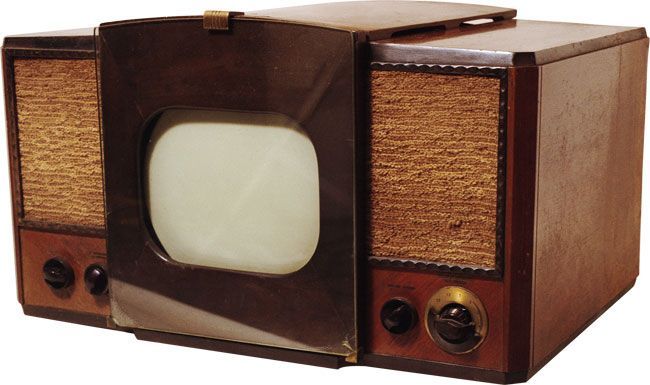
   I did my Each One Teach One assignment on the history of television. As someone who finds film and media in general interesting, I thought that this would be an exciting concept to explore. In my presentation, I stated that there was not just only one person who came up with the idea of television, but many great minds and thinkers of the world came up with ideas that surrounded the idea of television that we know today. Two of these great minds that thought of the idea of television were Alexander Graham Bell and Thomas Edison. The two of them believed that it was possible to translate images for each other in that others could view them as well. It wasn’t until 1884 when Paul Nipkow was able to create an invention that allowed you to send images through wiring discs which he called the electronic telescope. Which is known as one of the first discoveries that led to the creation of television. 


It wasn’t until 1927 that a Scottish man by the name of John Baird gave the world’s first demonstration in front of a bunch of businessmen and investors on television. His demonstration was a success which led to him being able to create his own company known as The Baird Development Company in 1928. In that same year, the television was able to make its first successful transatlantic television transmission between New York and London.  


In the 1930s and 40s television started to take off and become a popular household item slowly. However, most people didn’t have one in their house and opted to still own a radio instead of a television. It wasn’t until a popular radio show by the name of Texaco Theater made its switch from radio to television in the 1940s that people started to buy a television set over the radio for their household. Texaco Theater making its switch from radio to television was a cultural phenomenon in itself because it boasted sales for televisions making it more of a necessary household item versus luxury for the wealthy. As television grew in popularity, so did the shows that they aired as well such as I Love Lucy, Bonanza, and Leave it to Beaver. Having television grow in popularity also allowed for the 1960 political debate between John F. Kennedy and Richard Nixon to air live.  


Although cable television was all the rage in the twentieth century, streaming services is what are most popular in the present day. This is due to the fact that cable is a dying business among all ages of people. Cable is dying because most people prefer to use streaming services because they are cheaper and more efficient. While cable companies are slowly losing customers and are raising their prices. Having access to a streaming service such as Netflix or Hulu is great because you can watch what shows you want at any time you want. As well as having apps for streaming services makes it more accessible to watch on your phone, iPad, or laptop. Which is something that cable could never fulfill.

Sources:

https://www.history.com/news/who-invented-television

https://www.britannica.com/technology/television-technology

giovedì 3 novembre 2022

Eight Values of Freedom of Expression

 I think that the Eight Values ​​of Freedom of Expression provide a great way of allowing ourselves to value our freedom and express it in different ways. I think the majority of these theories are important in their own way. However, I do believe that some are more important than others. One of the theories that really resonates with me and my beliefs is Protect Dissent. The theory states that "The First Amendment Protects minority views, no matter how unpopular." I think that hearing this is very important because in some situations people might think that the government is going against them, versus helping them. The theory also allows you to disagree with the government, which results in protests, although some can possibly be more violent than most. In Steven Shiffrin's book Dissent, Injustice, and the Meaning of America, he shows several examples of how the First Amendment is used to allow us to express ourselves. Even if our thoughts are going against our government. The second theory that I am in favor of is to Promotes Tolerance. I agree with this Value of Freedom because it allows us to still keep our first amendment right of freedom of speech, but it does allow hate speech as an act of this freedom. I don't agree with hate speech and spreading harm or negative impact to others, but since it would embed our freedom of speech to get rid of it, I think people should be allowed to say what they want and have to deal with the possible repercussions of it afterward. An example of this theory is gratefully explored in Jack Balkin's book Living Organisms. In his book by him, he explores different ways how to challenge our Constitution. It is important that we are able to challenge our Constitution through our first amendment right so that if important issues come up in the future we are able to take them to higher-ups and possibly get them changed or a new law installed. The third and final theory with which I agree is Individual Self-Fulfillment. I agree with this theory because it wants us to express ourselves and leads to us creating our own identities. This theory also leads us to positive ways of thinking versus negative ones, which can lead us to people to connect with similar beliefs. The perfect example of how this theory is used is in C. Edwin Baker's book Human Liberty and Freedom of Speech. In his book by him, he expresses and critiques multiple theories and their use of them. Explaining how these theories came through by persuasiveness and a philosophical view as well. All of these theories are important in their own different way. They differentiate from each other as well as connect and flow from one another. As well as they all tie to our first amendment rights as American Citizens and protect our words and thoughts. The most important idea I learned from reading the Eight Values ​​of Freedom of Expression is to allow challenging things, whether it be the Constitution or something else, can always make a difference. 


Sources Used: https://press.princeton.edu/books/paperback/9780691070230/dissent-injustice-and-the-meanings-of-america

https://www.hup.harvard.edu/catalog.php?content=reviews&isbn=9780674416925

https://global.oup.com/academic/product/human-liberty-and-freedom-of-speech-9780195079029?cc=us&lang=en


History of The Supreme Court

 Something that I learned about the Supreme Court that I didn't know before was that it was created in 1789 and also that it allowed Congress the ability to create inferior federal courts. I think the most important takeaway point about the Supreme Court is that when you look at the big picture, it only takes one person to disagree or agree out of nine to make a huge change to our rights. For example, if there is a bill trying to be passed and the agreement is split to 4-5, that fifth person just changed everything, from stating their opinion. The most surprising thing that I learned was that at the very beginning of the late 1700s when the Supreme Court was being established instead of having nine people, they had six. The video changed the way I think about the Supreme Court by seeing how they work as a group instead of just individually and how that can affect the U.S in a more positive or negative way. 

Links: https://www.history.com/topics/us-government/supreme-court-facts

How Social Media Affects Our Mental Health Through Comparison: Final Blog Post

How Social Media Affects Our Mental Health Through Comparison      In the twenty-first century, phones have become an everyday item for all ...